Buying on Davis Islands means front-row access to Tampa Bay living, but your seawall, dock, and lift are just as important as the house. You want confidence that the waterfront structures are sound, permitted, and sized for your lifestyle and boat. In this guide, you’ll learn what to look for, who to hire, and how permits work in the City of Tampa so you can move forward with clarity. Let’s dive in.
Davis Islands waterfront 101
Davis Islands sit inside Hillsborough Bay, which offers calmer conditions than the open Gulf, yet seawalls and docks still face boat wake, wind-driven waves, and storm surge during tropical systems. The normal tide range is modest, usually around 1 to 2 feet, but surge and wave runup create the real stress on marine structures. Long-term sea level rise and subsidence also matter for planning your investment over a 20 to 50 year horizon. You can review local projections with the NOAA Sea Level Rise Viewer and check regional trends through NOAA sea level data to frame long-range decisions.
- Review local flood zones for a property through the FEMA Flood Map Service Center before you write an offer.
- Expect marine structures to experience accelerated wear in high-wake areas and near busy channels.
Seawalls: what to inspect first
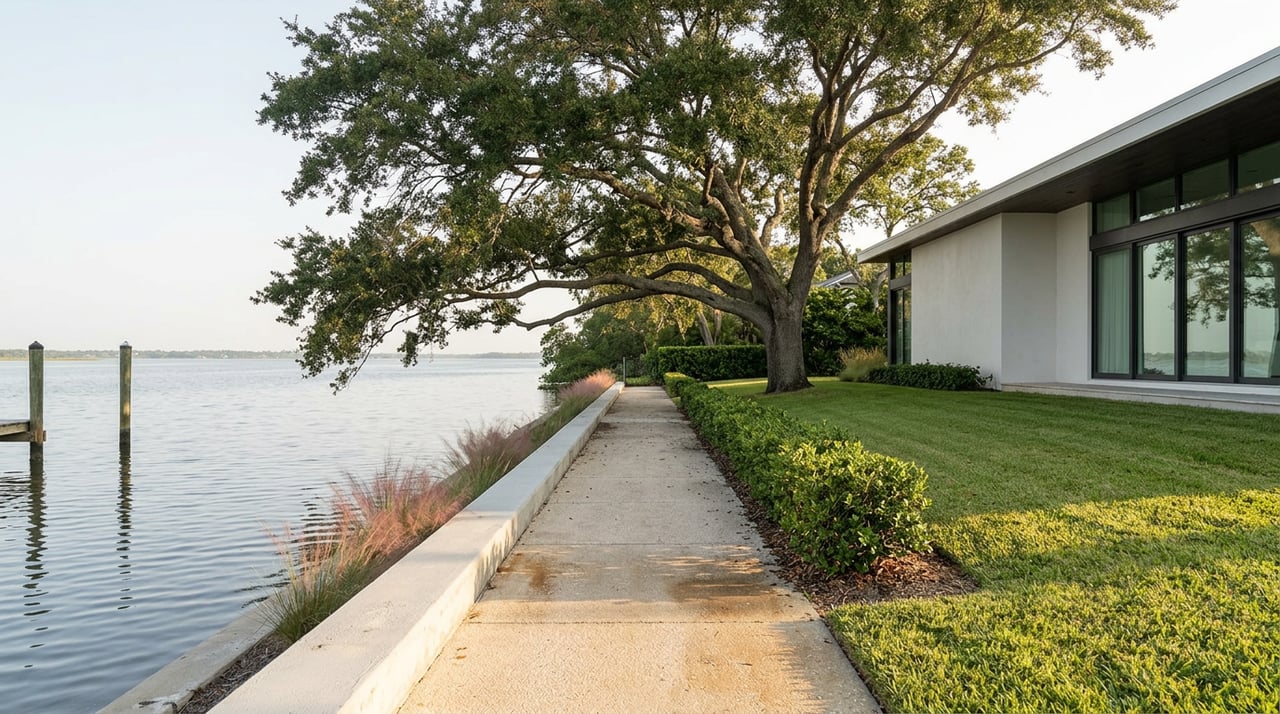
A seawall, also called a bulkhead, keeps land in place and resists waves. Common materials in Tampa Bay include concrete, steel sheet pile, vinyl sheet pile, and treated timber. Service life varies with design and maintenance. Well-built concrete and steel walls often last several decades. Vinyl and timber can be shorter lived, especially without routine care.
Look for these red flags during showings and inspections:
- Bowing, bulging, cracks, or a wall that leans out of plumb.
- Exposed or corroded reinforcing steel, rust staining, or spalling concrete.
- Undermining at the toe, missing riprap, or holes where fill is washing out behind the wall.
- Corrosion on steel sheet pile, coating loss, or visible section loss.
- Rot, borer damage, or softness in timber members.
Maintenance details matter. Confirm there is toe protection like riprap, working weep holes or other drainage behind the wall, sound tiebacks or anchors, and stable landscaping at the top of the wall. Missing or clogged drainage can build pressure and hasten failure.
Docks, pilings, and lifts: condition and safety
Docks and lifts have more moving parts than a seawall. A thorough inspection should evaluate pilings, framing, decking, connections, hardware, and electrical.
- Pilings: check diameter, alignment, marine growth, and section loss from rot or borer activity.
- Framing and decking: look for loose boards, displacement, and corrosion at hangers and brackets.
- Hardware: verify stainless or hot-dipped galvanized fasteners where appropriate.
- Electrical: inspect shore power, GFCI protection, and all wiring for safe routing and weatherproofing.
- Boat lift: confirm capacity rating fits your intended boat, and check motors, cables or straps, pulleys, and hydraulic lines. Request service history.
Safety is nonnegotiable. Watch for exposed wiring, slippery surfaces, missing handrails where needed, and unstable pilings. If the lift’s capacity is not posted, treat that as a red flag.
Depth and daily usability
Water depth at mean low water makes or breaks boating plans. Ask your inspector to measure depth at the dock face at low tide. Consider:
- Proximity to channels and turning space for your boat.
- Bridge clearances or fixed obstructions on your route.
- Prevailing winds that affect docking and departure.
- Boat wake from nearby traffic that can stress structures and make boarding harder.
Permits and oversight: who regulates what
Several agencies regulate work on or over the water in Tampa. Your goal is to verify that existing structures were properly permitted and to plan for any future work.
- City of Tampa: local building and electrical permits. Start with the City’s Building and Permitting guidance to understand submittals and inspections.
- State of Florida (FDEP): authorization for work on or affecting Sovereign Submerged Lands and Environmental Resource Permits. Review FDEP’s Submerged Lands and Environmental Resource Coordination resources to understand state approvals.
- Federal (USACE): Section 10 and Section 404 permits for work in navigable waters. See the Jacksonville District Regulatory page for Florida-specific guidance.
Expect multi-agency coordination, possible environmental review for seagrass, and timelines that can span weeks to many months depending on scope.
Ownership lines and compliance
Waterfront deeds and surveys define where private property ends and state bottomlands begin. Many docks extend over sovereign lands and need a lease or authorization. Ask for past permits and as-built drawings. If there is no permit history, factor that risk into your offer. For deed and parcel research, the Hillsborough County Property Appraiser site can help you gather legal descriptions and historic records.
Your due diligence checklist
Use this list during pre-offer and inspection periods.
Before you write an offer
- Request copies of all permits and as-built drawings for the seawall, dock, lift, and electrical.
- Ask for maintenance records, dates and scope of prior repairs, and any insurance claims related to marine structures.
- Obtain a current survey that shows the mean high-water line and any riparian rights or easements.
- Review flood zones and local tides through the FEMA Flood Map Service Center and NOAA resources.
Protective contract language to include
- “Waterfront structure inspection by qualified marine engineer or contractor satisfactory to buyer.”
- Permit review contingency that verifies structures were properly permitted or that after-the-fact permits are obtainable.
- Cost estimate contingency for identified repairs or full replacements.
Specialists to engage
- Licensed marine contractor or a coastal or marine structural engineer for the seawall, dock, and lift.
- Licensed electrician experienced with marine shore power systems.
- Licensed surveyor to confirm boundaries and structure locations relative to property lines.
- Environmental consultant if seagrass or sensitive habitat is present.
What the inspection should report
- Seawall: face condition, cracks, reinforcement exposure, tilt or bulging, toe undermining or scour, presence and condition of armor, drainage and tieback integrity.
- Dock and lift: piling decay or section loss, lift cables and winches, structural connections and hardware corrosion, electrical safety and GFCI.
- Utilities and safety: fueling lines, lighting, handrails, non-slip surfaces.
- Depth and navigation: measured low-tide depth at the dock, proximity to maintained channels, any recent shoaling reports.
Costs, timing, and seasonality
Seawall replacement or dock reconstruction can be significant line items and should be evaluated alongside the home price. Costs vary with materials, access, wall length, required underpinning, and any mitigation for environmental impacts. Obtain at least three quotes from qualified local marine contractors and include permit fees, demolition, and disposal in estimates. After major storms, contractor backlogs and permit timelines can extend for months. Plan ahead during peak seasons, especially spring through fall.
Resilience and long-range planning
Design choices today can extend service life and reduce future retrofit costs. Consider higher pilings for docks, open or grated decking to reduce shading over seagrass, and layouts that accommodate expected water levels over the next several decades. In some lower-energy settings, living shorelines with native plantings or oyster elements can reduce wave energy and provide habitat. For background, review Florida Sea Grant’s guidance on living shorelines. Use NOAA’s Sea Level Rise Viewer to visualize scenarios for your preferred timeline.
Quick links and local resources
- City of Tampa permitting: review building and electrical requirements for docks, lifts, and seawalls through the City’s Building and Permitting page.
- State of Florida approvals: consult FDEP’s Submerged Lands and Environmental Resource Coordination overview for state rules and authorizations.
- Federal permits: see the USACE Jacksonville District Regulatory guidance for work in navigable waters.
- Flood risk: check the FEMA Flood Map Service Center for current flood zones.
- Sea level planning: use NOAA’s Sea Level Rise Viewer and NOAA sea level trend data for Tampa Bay.
- Property records: verify parcel data via the Hillsborough County Property Appraiser.
Ready to evaluate a Davis Islands waterfront home with confidence? Connect with the local team that handles luxury waterfront due diligence every day. For discreet guidance, vetted contractor referrals, and offer strategies that protect your interests, contact the KVA Group to Request a Confidential Consultation.
FAQs
How long do seawalls and docks typically last in Tampa Bay?
- Service life varies by material and maintenance. Many concrete or steel seawalls can perform for several decades, while vinyl and timber elements often have shorter lifespans. Inspection findings should drive your budget and timelines.
Do I need permits to replace or add a dock or boat lift on Davis Islands?
- Yes, expect City of Tampa permits and, depending on scope and location, approvals from the Florida Department of Environmental Protection and the U.S. Army Corps of Engineers. Multi-agency review is common.
Will a seawall prevent flooding during storms on Davis Islands?
- A seawall primarily resists erosion and wave action. It does not eliminate inundation risk from storm surge or heavy rainfall. Always review FEMA flood zones and local flood history.
How do I know if a lift fits my boat?
- Match the lift’s posted capacity and cradle setup to your loaded boat weight and dimensions. Have a marine contractor verify capacity, motor condition, and cable or strap integrity during inspections.
How long do permitting and construction usually take for waterfront work?
- Timelines vary with complexity and season. Straightforward projects can still take weeks, and complex replacements with environmental review can take months. Post-storm demand can extend schedules further.