If you want a home that feels polished, private, and easy to lock up and leave, South Westshore deserves a closer look. For many buyers, the appeal is not just square footage. It is the ability to live near Tampa’s major business, retail, dining, and airport hubs while keeping a more elevated, low-maintenance lifestyle. This guide will show you what luxury townhome living often looks like in Westshore, what features tend to define it, and what you should verify before you buy. Let’s dive in.
Why Westshore Stands Out
Westshore sits on Tampa’s western edge in Hillsborough County and spans a major part of the city’s urban core. The district is roughly 10 square miles and is framed by Kennedy Boulevard, Himes Avenue, Hillsborough Avenue, and Old Tampa Bay, including Rocky Point. South Westshore is also recognized by the City of Tampa among the neighborhood associations in City Council District 4.
What makes the area especially compelling is scale and access. Westshore is Tampa Bay’s largest employment center, with about 12.2 million square feet of office space, around 105,000 employees, more than 6,500 businesses, 250-plus restaurants, and 350 retail stores. Tampa International Airport is also in the heart of the district, which gives the area unusual convenience for frequent travelers and busy professionals.
For daily life, that means your home base can sit close to where you work, dine, shop, or catch a flight. HART serves the district with multiple routes, and the area is tied into I-275. If your schedule is full, Westshore can offer a practical kind of luxury: less time commuting and easier access to the rest of Tampa.
What Luxury Townhome Living Means Here
In South Westshore and the broader Westshore area, luxury townhome living usually looks different from a large-lot suburban home. The focus tends to be on thoughtful design, efficient space, and upgraded finishes rather than expansive private yards. In many cases, you are trading lawn maintenance for location, style, and convenience.
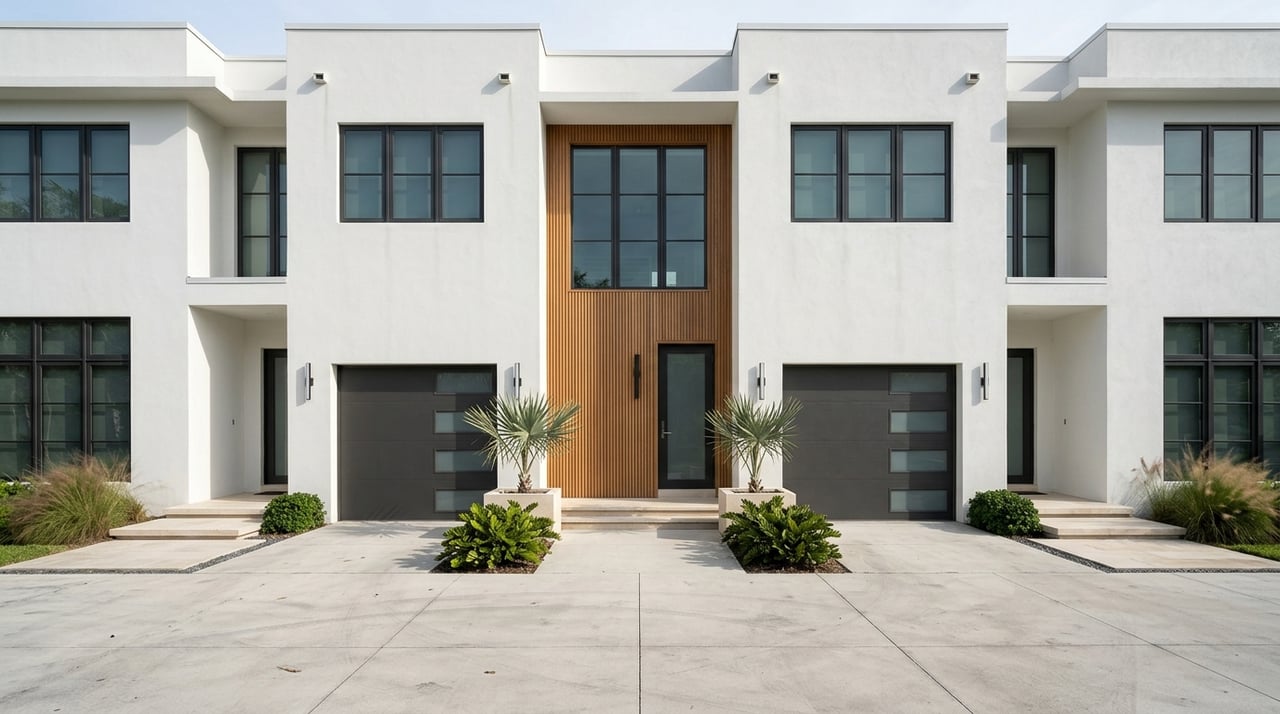
Local examples show several common features. You will often see open-concept layouts, attached garage parking, multiple levels, balconies or terraces, and a more lock-and-leave setup. Shared amenities may also be part of the experience, depending on the community.
This style of living can work well if you want a home that feels more private than a typical condo but simpler to maintain than a detached house. That balance is a major reason buyers look at Westshore townhomes in the first place. Still, the exact lifestyle depends on the community structure and governing documents, not just the listing label.
Design Features You Can Expect
Open layouts and vertical living
Many luxury townhomes in Westshore are designed across two, three, or even four levels. That vertical layout can create separation between entertaining areas, guest rooms, and private living spaces. It also allows builders to fit more usable square footage into urban locations where land is limited.
Open-concept main living areas are a recurring theme in local projects. These layouts tend to connect the kitchen, dining, and living spaces in a way that feels more contemporary and social. If you enjoy hosting or simply want a brighter, more connected floor plan, this is often part of the appeal.
Garage parking and practical privacy
Garage parking is another defining feature. In Westshore-area examples, attached garages help provide convenience, weather protection, and a more house-like feel. In an urban district where access and efficiency matter, that feature carries real value.
Attached townhomes also tend to offer a middle ground between condo living and detached living. You may share walls, but you often gain your own front door, garage, and more distinct separation of space. For many buyers, that added privacy is an important upgrade.
Outdoor space without large-yard upkeep
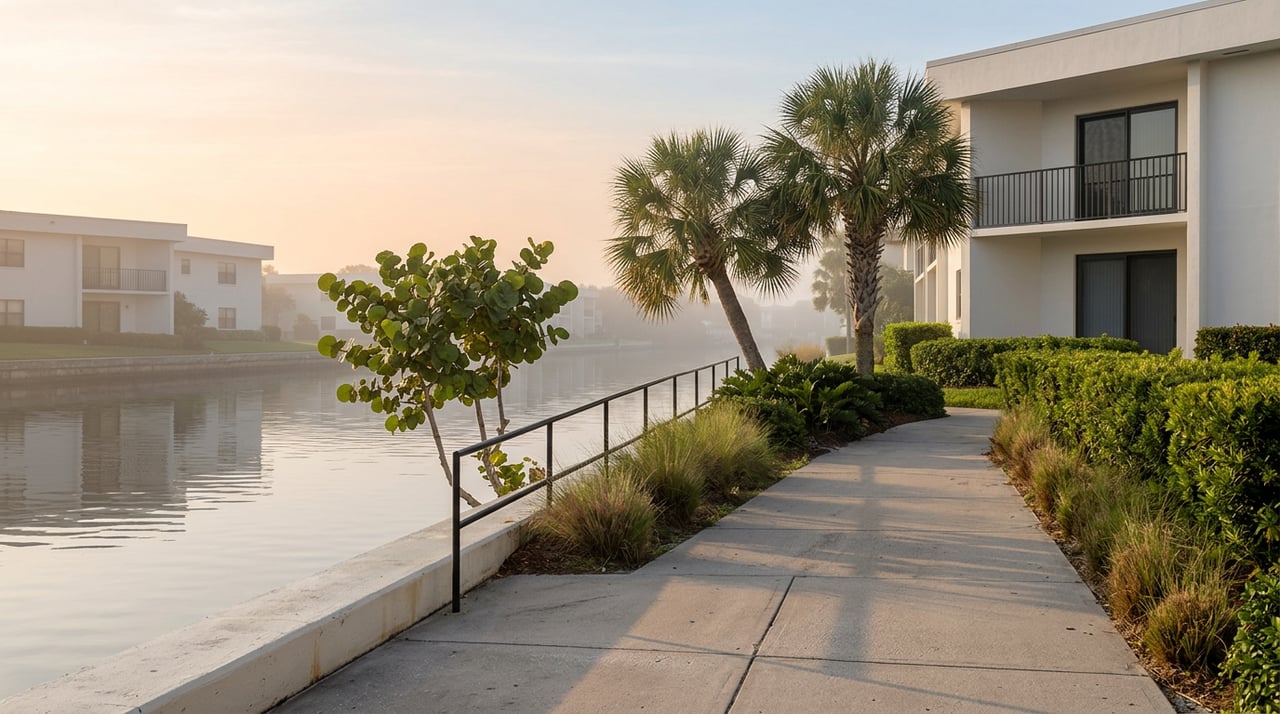
Instead of oversized lots, luxury townhomes here often include balconies, terraces, or small outdoor living areas. That setup can give you room to enjoy fresh air or water views without taking on the maintenance of a large property. In a market where lifestyle and location often take priority, that tradeoff makes sense for many buyers.
At the higher end, outdoor features can become a major part of the home’s identity. Waterfront options in the broader Westshore area show how terraces and marina-facing spaces can extend the living experience in a meaningful way.
Real Examples From Westshore
Westshore Village
Westshore Village offers a useful example of what low-maintenance luxury can look like in the business district. The community includes 41 attached townhomes with alley-load garages, three open-concept floor plans, designer upgrades, and shared amenities like a pool, grill area, and bocce ball courts.
The location also reflects a core Westshore advantage. The community was highlighted for convenience to International Plaza and Bay Street, Tampa International Airport, Raymond James Stadium, and public transportation. That mix of access and ease is central to the Westshore townhome lifestyle.
Westshore Crossing
Westshore Crossing shows another side of the product type in South Tampa. The community includes a two-story townhome of 1,612 square feet with three bedrooms, two and a half baths, and a two-car garage, along with a three-story option of 1,771 square feet.
The builder emphasized access to shopping and dining as well as proximity to the Westshore Business District, Midtown Tampa, Downtown Tampa, and MacDill Air Force Base. For buyers who want a central Tampa base, that kind of positioning is often the point.
Harbour Homes at Marina Pointe
At the top end of the category, Harbour Homes at Marina Pointe illustrates what waterfront luxury townhome living can become. This collection includes only fourteen waterfront townhomes and is described as offering the feel of a single-family home with none of the upkeep.
These homes include four levels, private interior elevator access, direct marina frontage, terraces, and access to resort-style amenities. The surrounding Westshore Marina District is described as a walkable waterfront neighborhood with dining, boutique shopping, a marina basin, a kayak launch, and 1.5 miles of waterfront pedestrian paths. For buyers drawn to a refined waterfront setting, this is a distinct version of Westshore townhome living.
Why Buyers Choose This Lifestyle
One reason buyers gravitate to Westshore townhomes is efficiency. You can often get a house-like layout, garage parking, and more separation than a typical condo while staying close to major business and travel corridors. In practical terms, that means your home can support a demanding schedule without feeling purely utilitarian.
Another draw is lower day-to-day upkeep compared with many detached homes. Local examples point to attached homes with shared amenities and design choices that reduce exterior maintenance demands. For downsizers, second-home buyers, and relocation buyers, that can be especially appealing.
There is also the urban factor. The City of Tampa’s Westshore Commercial Overlay District guides parts of the area toward a more pedestrian-oriented form, with standards for new construction and major renovations. That framework helps explain why some Westshore townhome communities feel more connected, walkable, and city-like than suburban alternatives.
Townhome, Condo, or HOA: Know the Difference
This is one of the most important things to understand before buying in Florida. The word townhome describes a style of home, but it does not automatically tell you the ownership structure. A property marketed as a townhome could be organized as a condominium, an HOA-governed parcel, or another structure defined by its legal documents.
Under the Florida Building Code, a townhouse is an attached single-family dwelling unit that does not exceed three stories. But ownership can still vary. Florida condominium guidance notes that condo ownership can exist in row structures, semi-detached structures, and even single-family homes.
If the property is a condominium
In a condominium, ownership usually includes the unit plus an interest in common elements. The association is generally responsible for maintaining, repairing, and protecting common property such as the land and shared facilities. Owners typically own the interior surfaces inside the unfinished walls, floors, and ceilings, while structural parts and land are usually common elements.
If you are considering a condo-form townhome, review the documents carefully. Florida guidance says you should check ownership and voting rights, common-expense shares, use restrictions, owner maintenance duties, insurance, reserve funds, litigation, rental rules, and pet policies.
If the property is in an HOA community
In a Chapter 720 HOA community, you become a parcel owner and a mandatory member of the association. The declaration of covenants and other recorded documents help control what owners can and cannot do. The HOA disclosure summary warns buyers about assessments, special assessments, lien risk, and possible municipal or special-district assessments.
Exterior standards can also vary widely. Under Florida law, associations and architectural committees may enforce exterior standards only as authorized by the declaration, and those standards must be applied reasonably and consistently. That means roofs, windows, landscaping, and exterior upkeep may be handled very differently from one community to the next.
What to Review Before You Buy
Before you fall in love with finishes or views, slow down and confirm how the lifestyle actually works. In Westshore, details like maintenance, insurance responsibilities, and fees can shape your ownership experience just as much as the floor plan.
Focus on these questions:
- Is the property legally structured as a condo or an HOA-governed townhome?
- What do your monthly or quarterly assessments cover?
- Who maintains the roof, exterior walls, windows, and landscaping?
- Are there reserve funds, and how are major repairs handled?
- Are there rental, pet, parking, or use restrictions?
- Are there any current or possible special assessments?
- What insurance responsibilities belong to the association versus the owner?
The key takeaway is simple: do not assume the lifestyle from the word luxury or townhome. In Florida, the documents tell you what you are really buying.
Is Westshore Right for You?
If you want an urban Tampa location with strong connectivity, luxury townhome living in Westshore can be a smart fit. It often suits buyers who value privacy, modern design, attached garage parking, and reduced upkeep compared with a detached home. It can also work well if you travel often or want to stay near employment, dining, and airport access.
The best-fit buyer is usually looking for convenience with polish. You may be downsizing, relocating, buying a second home, or simply choosing a more streamlined lifestyle. In each case, Westshore offers a version of luxury that is less about excess and more about smart, well-positioned living.
If you are weighing townhome options in South Westshore or the broader Tampa urban core, having local guidance matters. For a discreet, strategic conversation about Westshore opportunities, new-construction inventory, or luxury urban living in Tampa, connect with KVA Group.
FAQs
What does luxury townhome living in Westshore Tampa usually include?
- Luxury townhomes in Westshore often include open-concept layouts, attached garage parking, multiple stories, balconies or terraces, and upgraded finishes, with less emphasis on large private yards.
Why do buyers choose South Westshore townhomes?
- Many buyers choose South Westshore for its access to the Westshore Business District, Tampa International Airport, I-275, shopping, dining, and a more low-maintenance lifestyle than a detached home may offer.
Are all Westshore townhomes fee-simple homes?
- No. In Florida, a home marketed as a townhome may be organized as a condominium or as a parcel in an HOA community, so you need to review the legal documents to confirm the ownership structure.
What should you review before buying a luxury townhome in Tampa?
- You should review assessments, maintenance responsibilities, insurance obligations, reserve funds, restrictions, rental rules, pet policies, and any possibility of special assessments.
How is a Westshore townhome different from a condo?
- A Westshore townhome may offer a more private entrance, garage parking, and a house-like layout, but the real difference depends on whether the property is legally structured as a condo or an HOA-governed parcel.
Is Westshore a good fit for frequent travelers?
- Yes. Westshore can appeal to frequent travelers because Tampa International Airport is in the district, the area connects easily to I-275, and public transit serves multiple routes through the district.